Showing posts with label 1:1. Show all posts

Saturday, July 16, 2016

The State of Digital Citizenship

The Big Four
Over the years I have worked hard at providing a reliable environment to support K-12 staff and students in a relevant and meaningful learning community. A simple rule of thumb that I have done my best to follow is focusing on what I have called, "the Big Three". The Big Three is made up of three categories: infrastructure, devices, and professional development. As the years have passed and mobile devices have found their way into the hands of all staff and students, the Big Three is no longer enough, enter the new “big” on the block, digital citizenship.
Digital citizenship is not new, but in many cases it has not been part of the foundation when creating technology plans, nor has it been part of the conversation at administrative team meetings. However, we can no longer ignore that the number of student devices in the classroom is on the rise. By the 2016-17 school year, half of all school districts in the US will be 1:1 with mobile devices, according to Futuresource Consulting. This fact, combined with the decreased cost of mobile devices, means that digital citizenship must be taught and addressed.
Where Are We?
In the state of AZ, Jeff Billings, technology director at the Paradise Valley School District, has generated a bit of buzz around digital citizenship. Billings has created the Arizona Digital Citizenship Statewide Data Collection Project and hopes to have all students in the state represented when the project is complete. He has already collected data from over 250,000 students; the plan is to begin sharing the data next fall after the results have been disaggregated. The goal is to have a reliable source of information on digital citizenship across the state and promote further discussion and collaboration.
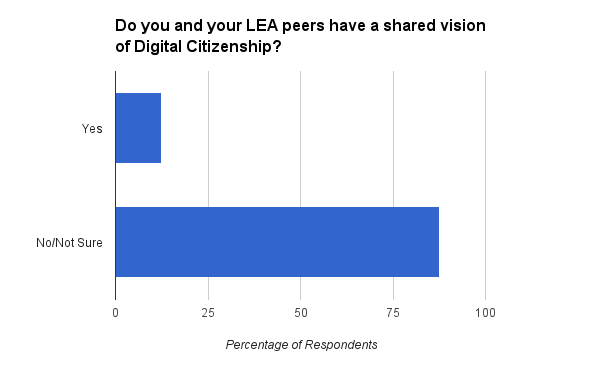

The picture painted by some of the early data shows that the local education agencies are at various places with respect to a shared vision of digital citizenship implementation in the classroom. It appears that a shared vision within districts is not the norm, which should prompt concern among all stakeholders. The way in which respondents prioritized the eight elements of digital citizenship is also notable. To be consistent in the delivery of digital citizenship, is any element more or less important than the other?
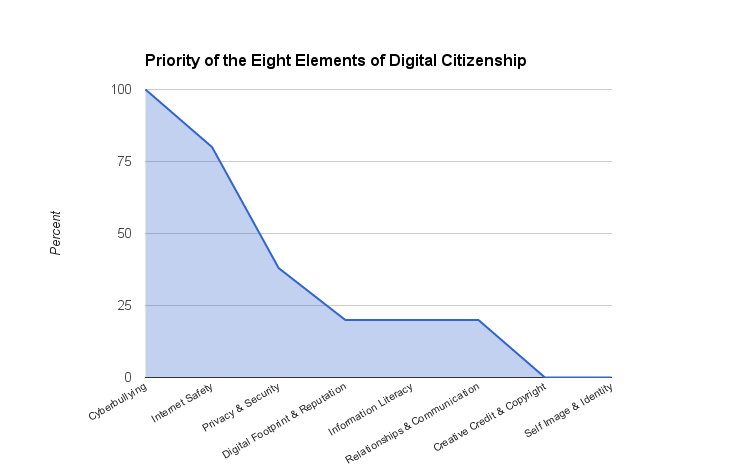
This project holds promise for bringing together districts from across Arizona and providing talking points that could lead to positive collaboration and common language among educators. We should applaud the effort and look forward to the data.

Moving Forward
It is becoming clearer everyday that digital learning is on the rise, even if our schools do not provide these opportunities. The 2014 SpeakUp Survey showed that 75 percent of students think every student should have access to a mobile device during the school day to support learning. Many of them have taken matters into their own hands, as 58 percent already use their own smartphones in class and perform such tasks as taking photos of assignments and textbook pages.
So where do we start with such an overwhelming responsibility that affects our classrooms and the teachers that ultimately set the example for our students? A quick Web search will return numerous sites with digital citizenship resources. Common Sense Media is a popular choice and offers scope and sequence materials that are age appropriate for the classroom and a certification program for educators and schools. It takes much more effort, however, to find actual programs that exist in schools-examples of digital citizenship embedded in those teachable moments that are so relevant to our students. We need to shared successful programs and hold them up as models for others to see (#digitalcitizenship).      


A Partnership
Digital citizenship is no different from good citizenship in general-the only distinction is the medium where that community exists. If we expect our students to be responsible members of the digital community, we have to collaborate with all stakeholders to create successful learning opportunities, encourage parental support, lead by example, and include our students in that discussion. Technology is no longer a once-a-week event or a trip to the computer lab; it is embedded in our classroom and personal environments. It will take more than the librarian or tech teacher to instill the values of digital citizenship into the lives of our students and make good digital citizenship part of the Big Four.

Sunday, June 17, 2012

Time To Reflect

Time Time Time
Time is one of those things that we never seem to have enough of and it flies by like a supersonic jet! Each school year seems to be getting shorter and shorter or maybe it is because I am getting older, I mean wiser. At any rate, reflection is a very important piece of our daily lives and critical to our success. This past school year there has been a number of experiences that I have reflected upon and would like to share a couple. Please feel free to provide feedback on your experiences also, it helps to read about how others are processing and dealing with similar situations.


www.ajusd.org/ccjh
There are many exciting initiatives going on in my district, but finishing the first complete school year in which our 7th and 8th graders were taking their devices to and from school has brought mixed emotions for me. Educationally, our teachers and students have done an amazing job with the transition and I am looking forward to reviewing this years test scores when they are made available. On the technical side of things, there were a few bumps and even though our local area network connections are robust, our Internet connection is a bit lacking. But those things can be worked on and the 1:1 technician, Mr. Frahm, has done a great job. Not only has he kept the student devices in running order, but the students all know just how important it is to have a great technician on campus to assist them when needed.

One of the difficult pieces for me personally has been the number of devices that have been dropped over the last year. When comparing numbers with other 1:1 programs our overall device loss is within reason, but damage due to dropping seems higher than I would prefer. Here is where I would appreciate some feedback, the devices are not being dropped at school, it is when they are outside the campus. We know this because when at school, the rule is the device stays in the provided carrying case when opened. Little plug for Higher Ground cases, they can pop open the case in seconds and the device never has to be removed, protecting it from a fall. So the question is how to continue working on educating the students to care for their device when away from school?

Collaboration Coaches
Earlier this month a new group of teachers met and began their journey together as the third new group of AJUSD collaboration coaches. Our district's Technology Integration Specialist, Tracy Watanabe, has done an amazing job with building our collaboration coaching program and in my opinion, coaches are key to a successful campus. Watanabe does a great job of explaining how collaboration coaches have worked together in our district to bring 21st century learning skills into our classrooms, click here. A bit of reflection on this topic makes on thing clear to me, I need to spend more time in the coaches classrooms and sitting in on collaboration meetings this fall. Experiencing the relationship building and the sharing of ideas among these professionals is truly inspiring.

                                                                      
Thanks to gbuffet
Take A Moment
Often we become so consumed with planning for the summer or that next big project, we forget to reflect on what we have already done, what worked well, what failed, how we can incorporate prior knowledge into future planning. I only shared two of many experiences that I needed to reflect upon before the busy summer months began, unfortunately time often flies by like that jet I mentioned earlier. Being focused is important, but so is reflection, take a moment, find a quiet place for some inward thinking and call it a day.

Friday, May 4, 2012

Kindergarten Classes Rock!

Big K
What is it with kindergarten classrooms being so warm and inviting? From the moment I walk into most kindergarten classrooms I want to run to all the different areas of the room and plop down on the floor and play.....or should I say learn.

Kindergarten classrooms are setup in such a way that just screams collaboration and student centered learning! You will be hard pressed to find rows of desks or a hands off environment. So why is it that first grade classrooms look a little different and by second grade the rows of desks start realigning and by third grade things are looking more like a high school classroom than the inviting kindergarten classroom that seems to foster creativity and exploration? I am being a bit extreme of course, but the vibe of the kindergarten classroom is definitely missing as our students move through the K-12 system and just maybe the idea of how we setup a classroom can go a long way in creating a student centered environment.


Look At It
I was recently speaking with a principal of a 9-12, 1:1 program, and asked them what they expect their classrooms to look like. Their answer was, "a kindergarten classroom," of course you won't find an ABC train across the front wall, but the open and inviting learning atmosphere where evidence of small group instruction and multiple styles of learning are taking place is what they look for.

Build One
So where does one start in building a learning environment that resembles a kindergarten classroom? Maybe a traditional computer lab, with those 20th century rows, would make a good room for a makeover. The computer lab has been morphing into a more collaborative space since the days of the Apple IIe and with space being an issue at many schools, these rooms are often overlooked as being a solution in building a non-threatening place to promote a modern learning environment. For an example of a lab transformation, take a look at what they have done at Verrado Middle School in Litchfield, AZ.

Straight Rows 
There are times when straight rows may be necessary, they make watering crops easier or quickly finding a particular product in a grocery store more convenient. However rows are restrictive and don't create that warm and inviting atmosphere that make you want to plop down on the floor and learn. No matter what grade you teach, if you have a few minutes, stop into a kindergarten classroom and take a look at the room setup, listen to the sounds, and take notice of all the learning that is taking place.  

Sunday, December 18, 2011

To The Extreme

Not That One
courtesy of Jim Crossley-raindog
If you thought that I was going to break into a Vanilla Ice song after reading the title to this post, then I apologize. I did however find it a little humorous that the line "collaborate and listen" was in Ice Ice Baby, maybe Vanilla was a bit ahead of his time. But on a serious note, I have been pondering lately why everything seems to be to the extreme, education reform, leadership style, politics, couponing. Rarely these days do you see push, pull, "off balance on purpose" situations that challenge and take staff to the edge, but not completely push them off the cliff. I would argue that disruption, innovation, pushing adults and students can take place with great results without an entire staff/class ending up at the bottom of the canyon.

Off Balance
How many times have you heard that to much of any one thing is not a good idea? The pressure to perform in the K-12 arena seems to push ideas to the extreme and one giant weight is dropped on the balance scale, with no hope of returning to the off balance place that is desired. In Dan Thurmon's book, "Off Balance On Purpose," he writes:

courtesy of christart.com
When we experience imbalance in our lives, we often overcompensate by throwing ourselves in another direction. We think that it takes bold, dramatic action to create change. Sometimes this is true-we reach moments in our lives when a huge shift in thinking or action is completely necessary. But usually when we find ourselves in that predicament, it is because we missed many previous opportunities to make smaller adjustments that would have prevented, or at least softened, the crisis. Often an attempt to overdo it, providing to much force in one direction or another to quickly, will only exacerbate the trouble. -Dan Thurmon

The same thought can be applied to organizations that are struggling to be successful and looking for the magic bullet of change. Instead of looking at the foundational issues within, a bold, dramatic action takes place that results in the scale being tipped completely over.

Technology Balance
I think we often tip the scale to the extreme with technology initiatives as a silver bullet approach, missing the foundational pieces that will truly make using technology in our classrooms relevant. Take a look at all the 1:1 initiatives that have struggled over the years because the focus was on the shiny new object and not:                           

-Good teaching
-Professional Dev
-Digital Citizenship
-Parent involvement
-Infrastructure
-Sustainability

An example of going to the extreme in a 1:1 environment would be piling up every book on campus and having a giant bonfire to celebrate every student having a device. Sure this would afford the ability to eliminate certain texts and some paper use that is not necessary, but a successful 1:1 isn't measured by walking into a classroom and every student having a device open in front of them. We need to think about being off balance enough to sustain meaningful change, without pushing the entire group to the bottom of the canyon for the sake of a photo op. 

Welcome Change
I enjoy change and new things, maybe that is why I don't like riding the same exact trail every day on my bike, or listening to the same music on repeat for a year at a time, I even enjoy clipping a coupon now and again. Speaking of coupons, before creating a stockpile that turns into an episode on hoarding, ask yourself if you are off balance or just going to the extreme for that photo op.

Tuesday, June 28, 2011

The Birds-ISTE Update

Tech Commandments
Catchy name for a session led by Adam Bellow, check out the eduTecher blog. He started the session on a good note by saying there would be no


which at that point I figured this was going to be a no lose session. Adam had some great quotes and information he shared, few of them below.

"Training needs to be a priority, but not all about hardware and software"
"Educational technology is not all about stuff"
"I don't like students using cell phones because they know more than me and look things up"
"Any teacher who can be replaced by a robot should be"
"Lies my teacher told me"
"Be like the kids, be stubborn and resilient, don't give up"
"Collaboration is the 21st century skill"

Leading in 3D
This session was lead by Chris Oneal and very relevant for principals and how to be a technology leader by modeling. Check out his wiki, here is a quick question for principals from Chris.

Do you lead by example? Teachers and other instructional staff look to you to demonstrate a commitment to technology through efforts that make sense for your job, yet define the expectations you have for technology use across the board.

Birds-of-a-Feather
I ended the day with a birds session on 1:1 computing and was excited for this one as it was more of a round table discussion. It was interesting hearing about what a district or two in Australia was doing with their 1:1 initiative and others experiences in their adventures to change the learning in their own little part of the world.

Thanks for reading and I will try and post one more time tomorrow as I am running a day behind now!