Showing posts with label Collaboration. Show all posts

Sunday, November 24, 2019

Round 2

Continued...
I hope you enjoyed Round 1 and took some time to do a
bit of reflecting. For another perspective on the benefits of
reflection, take a listen to John Maxwell and his take on
reflection turning experience into insight. Enjoy round 2!

Communication Systems
Usually the answer you hear when someone poses the
question how can our organization be better, is
communication needs to be improved. It is important to remember that communication is a two way street. You can't force someone to listen to your communication, but you should do your best to provide communication in a number of ways
that reaches your community.

The GPS Marketing and Communication team is a small 
but powerful group that has put in place a number of tools 
that allow the district, departments, and schools to 
communicate with stakeholders on a large scale. Besides 
a newly implemented website that is constructed to be the 
one source of truth for the parents and community, it also 
includes a messaging system that disseminates information 
via e-mail and text to parents and guardians. Each school also has tools to distribute site information through online newsletters and teachers can directly communicate 
via e-mail with parents and guardians through the district 
student information system. Each school has the ability to 
use these tools as they choose and decide what works best 
for their community.  From an IT perspective, the biggest challenge with any communication system is parent and guardian support. It is challenging to assist these groups on devices not owned by the district. The schools and Technology Services do their best to assist so that these communications reach them. Our help desk staff is also great at assisting with most issues.

Data Governance
Data governance is a very relevant topic at this time with protecting
user data from unauthorized access, proper data agreements with
third party resources, and educating users on the importance of
protecting their information from non trusted sources.


User data for any organization should be protected using best practice methods and continually reviewed for any needed adjustments. Districts should not hesitate to work with outside consultants for assistance in maintaining these best practices and configuration setups. Staying connected with cybersecurity organizations for the latest information on know vulnerabilities, updating all systems, and educating end users is critical for staying protected from threats. 

Data Access
The GPS Accountability and Assessment department works closely with all GPS schools in assisting them on how to best use collected data to guide instruction and improvement. District and state-level assessment information is reviewed in the department, presented at the Cabinet and school leadership level and used as a tool in discussion around increasing and shaping possible strategies for student improvement. Our Technology Services Information Systems team has built an internal database that assessment data can be imported along with other student demographic information. We have recently begun using a data analytics tools to build visualizations based on the needs of stakeholders. This allows for years of data to be looked at in a visually pleasing format and easy studying of trends based on different areas of selection. 

Ethics and Policies
One very notable piece of federal legislation passed in 2000 by Congress 
is the Children’s Internet Protection Act (CIPA). “CIPA imposes certain 
requirements on schools or libraries that receive discounts for Internet 
access or internal connections through the E-rate program – a program 
that makes certain communications services and products more 
affordable for eligible schools and libraries. In early 2001, the FCC issued 
rules implementing CIPA and provided updates to those rules in 2011.” 
GPS takes part in the E-rate program and provides content filtering to 
protect our students as best we can. 
The GPS Technology Services team feels we have an obligation to provide a Digital 
Citizenship curriculum to all students in GPS. We have partnered with 
Common Sense Media to provide an extensive curriculum for our teachers 
to use with our students K-12 and it is an expectation that this is done each 
year. Technology Services has also partnered this school year with the 
GPS K-12 Prevention Coordinator, who oversees the district 
social workers and counselors who assist our schools with the digital 
citizenship program. We feel as a district that the social and emotional 
well-being of our students is a priority and aspects of technology including
social media can often play a part in that area. 

Promising Technology Ahead
I always find the what's the next big thing question difficult to answer, so I
did appreciate this heading.

AZ Computer Science Standards-this will provide the roadmap needed for actual implementation in K-12 schools. The challenge, although not insurmountable, is teacher understanding and development and how computational thinking can be used across the curriculum. 

Learning models-It still seems there are struggles with different learning models due to the structure of the school funding system. GPS Global Academy is being creative with a couple of unique blended learning models and the outcomes are promising. The structure of bell schedules and traditional practices are still somewhat of a barrier in my opinion.

Artificial intelligence-AI and machine learning have crept into most 
aspects of our lives when it comes to determining our next purchase 
or what political flavor society falls into. It remains to be seen how 
this technology will benefit the K-12 learning environment so 
we can catch areas of needed remediation or enrichment for our 
students. This topic will also continue to bring into the spotlight the
ethical questions behind the technology.

Next Round...
Each one of the topics from round 1 and 2 could be stand alone discussions that would easily fill a page. It was a good exercise to put these thoughts down on paper, think a bit deeper about them, and find celebrations and areas that could use improvement. With the intention not to sound like a broken record, I will state again, without taking the time to give serious thought to our daily decisions and practice, improving them will be difficult and the same results will be achieved. Thanks for reading!

Tuesday, November 19, 2019

Round 1

Reflection
If there is one constant over the years that I have found most valuable for growth and improvement is reflection. Without taking the time to give serious thought to our daily decisions and practice, improving them will be difficult and the same results will be achieved.

Over the years I have been asked to answer questions around technology for peers working on their higher education degrees. The questions are usually similar enough that It is enjoyable to look back and see how my answers have changed and also create a blog post out of it, cause why not. I am going to split this one up as it was quite lengthy, enjoy!

Leadership and Vision
The biggest hurdle to developing a shared vision for technology use in today’s K-12 landscape is the divide between the Teaching and Learning and Information Technology departments. Historically the goals of these two areas have not been communicated to one another and the communication breakdown will lead to a lack of understanding of what is important for planning a meaningful and effective path for technology integration and a safe online learning environment for users. 
In Gilbert Public Schools we have an organizational chart that
allows for all-district departments to be represented at the Cabinet-level
including the Teaching and Learning and Information Technology
departments. Having the Executive Directors and Assistant Superintendents at the table allows for each area to be represented, communicate their needs and understand the importance of the IT side to ensure a safe network, protect student and staff data, and provide support to meet strategic plan goals.

Gilbert Public Schools has created a strategic operating plan that has technology e
mbedded to achieve the ultimate goal of, success for all students. Each area of focus, safe and supportive schools, family and community engagement, employee excellence, and financial and operational efficiency all have goals and action items in place that are measured to monitor progress and allow for modification when needed.

Technology is embedded in each of these areas but is only a small piece of supporting our student’s success. Ultimately, it is the relationship between teachers and students and the support provided by leadership that will allow us to measure the true success of the plan.  


Team Building and Staffing The same philosophy that applies at the district level for cross-functional departments is necessary within an Informational Technology team structure. The rapid rate of change that takes place with technology is difficult to communicate at times and does lead to issues with bringing awareness to end-users. In the GPS Technology Services department, there are 5 internal teams to include: IT Customer Care Specialists, Information Systems, Network and Telecommunications, Systems Administration, and Instructional Technology. Each leader of these areas plus a Project Specialist make up the Technology services leadership team. The Executive Director of Technology meets weekly in a formal meeting with the team and daily on an informal basis. This team is responsible for working closely with one another to ensure Technology Services is working collaboratively to support GPS. One example of this would be the leadership team working with one another to coordinate occasional cross-functional team meetings. They create an agenda around issues happening with end-users, ways to address them and share other problems or successes happening in the field. 

GPS Technology Services has also established a userXperience team that meets regularly to discuss and make decisions on existing and future implementations, device functions and features, updates, and other variables as it relates to the end-users in GPS. This group has representation from all Technology Services departments and is important to our end user’s success with implementations and integrations that impact the daily function of staff and students. We have been able to make changes and roll back changes based on the feedback they bring to the table representing each area of the department. 
      Instructional Focus and Professional Development
Bringing awareness to all staff members around emerging technologies and potential issues to protect the network and data is on-going. I agree with the philosophy of leading from the middle and that everyone is a leader regardless of their position. We encourage all Technology Services staff to share ideas, emerging technologies they see and support to everyone around them. Our Instructional Technology team works closely with site Principals to present at staff meetings, meet one on one with teachers, attend grade-level meetings, share a weekly newsletter and any other form of communication that leads to awareness. 

Another example from the department level is our yearly awareness campaign around Computer Science Week. For the last three years, the Technology Services department has provided support around CS by providing professional development activities, meet-ups, video campaigns, and support for our teachers to bring CS into their classrooms. 

There is not a one size fits all approach with learning and the same applies to the technology that can support the educational outcomes our teachers want for our students. 

Round 2
Thanks for taking the time to read a bit on what started as assisting a friend with their doctorate assignment to gaining a little glimpse of how we do things in Technology Services. There is not any secret sauce being served up here, just a good group of individuals working together for students. See you soon for Round 2. 


Sunday, August 26, 2018

Island Life


Tropical Paradise
I want to talk about island life for a moment and full disclosure, I have never lived on a remote island, so no offense to those who have. Living on a remote tropical island really sounds good though, at least for a short amount of time, but long-term, being on an island can become isolating. Not interacting with others, sharing, and working alongside peers that challenge you, will keep us from growing as individuals and we can become stale.

Stay Fresh

It is easy to become isolated on internal islands within our own technology departments. With the grind that comes with answering help desk tickets and trying to maintain normal daily responsibilities while pushing ahead with additional projects, communication between our peers becomes increasingly more difficult. If we layer on top of that the rapid pace that technology changes and the amount of content generated on a daily basis, the island starts feeling like a safe place to be. We all know however that isolation will not help us solve the problems in front of us, keep us fresh with new ideas, and increase collaboration amongst our peers to better serve our students and staff. 


PLN Strong
The concept of a professional learning network has been around for quite some time now and still, in my opinion, the most effective way to connect with peers. The power of a PLN is the informal manner that a person can participate, share content as well as consume, and take advantage of a global community. Having a staff that has strong PLN's will benefit our internal technology teams that often struggle with getting out and allows that isolated island feeling to creep in. Although the PLN and PLC terminology is synonymous with teachers and administrators, there is a vast community of technology-related professionals waiting to connect. A few places to connect with other technology-related professionals.
  • Twitter: Search hashtagsie. #itdirector, #networkadministrator, #datasecurity, #programmer
  • LinkedIn
  • COSN: Consortium for School Networking
  • ISTE: International Society for Technology in Education
  • State and local listservs 

Creative Time
I am not sure that creative time is a thing, my point here is that time is the magical piece that there is never enough of. Instead of using the old saying that you will find time for what is important, be creative with time and find different ways to get together other than the traditional meeting. A recent post on Engage, an employee engagement blog, on "7 Fun Ways to Host Team Meetings", points out a variety of simple common sense ways to make meetings not boring. Three of my favorites are mentioned below that I have added some ideas on how to make these easily happen with minimal time involved in preparation. 

  • Use grouping: We know birds of a feather flock together right, so instead of having everyone count off from 1-5 then split up, which is boring, pass out different pieces of candy to everyone when they arrive and find their table of like sugary fun. Substitute anything you would like if candy isn't your thing. 
  • Change the scenery: This one is very self-explanatory and why not meet at the local coffee shop, nothing makes a meeting more enjoyable than sitting in a comfortable chair with an iced coffee. One notable mention here is as the leader, you need to reassure your leadership team that this is OK. Let them know your expectations, traveling an hour across town to a nice speakeasy is probably not what counts as productive for most organizations. 
  • Switch up positioning: This is similar to grouping in moving people out of their comfort zone by not having them sit in the same exact chair every week. Here is where you need to lead by example, the next time you walk into the meeting room, you start it off by sitting in a different spot every time. If we expect others to venture out of their comfort zone, we must lead by example.

Sharing is Caring
I would love to hear what others are doing with their staff for staying fresh, building their PLN's and being creative with time. Leave a comment, tag me on Twitter @jcastelhano, share the great things you are doing!


Saturday, July 16, 2016

The State of Digital Citizenship

The Big Four
Over the years I have worked hard at providing a reliable environment to support K-12 staff and students in a relevant and meaningful learning community. A simple rule of thumb that I have done my best to follow is focusing on what I have called, "the Big Three". The Big Three is made up of three categories: infrastructure, devices, and professional development. As the years have passed and mobile devices have found their way into the hands of all staff and students, the Big Three is no longer enough, enter the new “big” on the block, digital citizenship.
Digital citizenship is not new, but in many cases it has not been part of the foundation when creating technology plans, nor has it been part of the conversation at administrative team meetings. However, we can no longer ignore that the number of student devices in the classroom is on the rise. By the 2016-17 school year, half of all school districts in the US will be 1:1 with mobile devices, according to Futuresource Consulting. This fact, combined with the decreased cost of mobile devices, means that digital citizenship must be taught and addressed.
Where Are We?
In the state of AZ, Jeff Billings, technology director at the Paradise Valley School District, has generated a bit of buzz around digital citizenship. Billings has created the Arizona Digital Citizenship Statewide Data Collection Project and hopes to have all students in the state represented when the project is complete. He has already collected data from over 250,000 students; the plan is to begin sharing the data next fall after the results have been disaggregated. The goal is to have a reliable source of information on digital citizenship across the state and promote further discussion and collaboration.


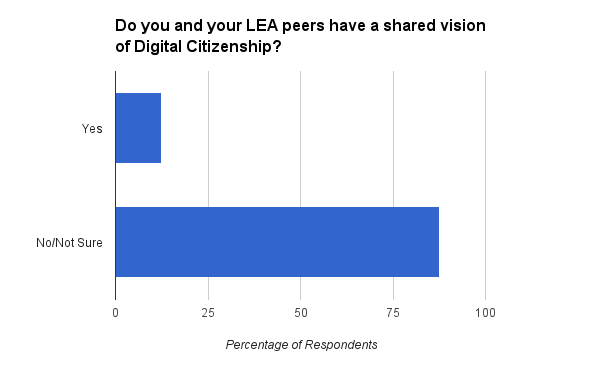
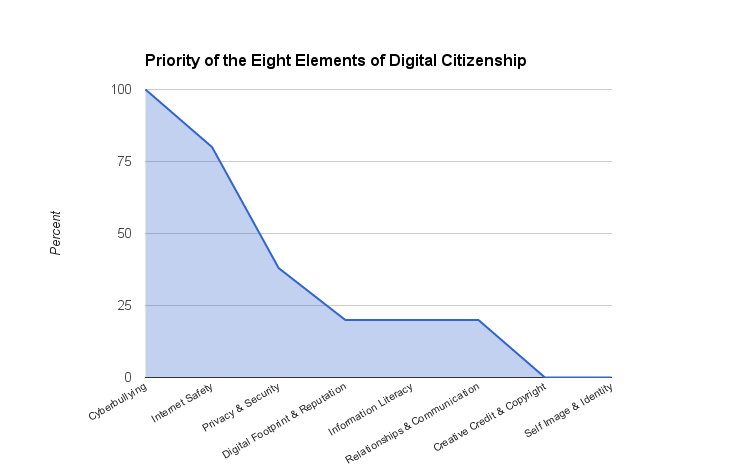
The picture painted by some of the early data shows that the local education agencies are at various places with respect to a shared vision of digital citizenship implementation in the classroom. It appears that a shared vision within districts is not the norm, which should prompt concern among all stakeholders. The way in which respondents prioritized the eight elements of digital citizenship is also notable. To be consistent in the delivery of digital citizenship, is any element more or less important than the other?
This project holds promise for bringing together districts from across Arizona and providing talking points that could lead to positive collaboration and common language among educators. We should applaud the effort and look forward to the data.

Moving Forward
It is becoming clearer everyday that digital learning is on the rise, even if our schools do not provide these opportunities. The 2014 SpeakUp Survey showed that 75 percent of students think every student should have access to a mobile device during the school day to support learning. Many of them have taken matters into their own hands, as 58 percent already use their own smartphones in class and perform such tasks as taking photos of assignments and textbook pages.
So where do we start with such an overwhelming responsibility that affects our classrooms and the teachers that ultimately set the example for our students? A quick Web search will return numerous sites with digital citizenship resources. Common Sense Media is a popular choice and offers scope and sequence materials that are age appropriate for the classroom and a certification program for educators and schools. It takes much more effort, however, to find actual programs that exist in schools-examples of digital citizenship embedded in those teachable moments that are so relevant to our students. We need to shared successful programs and hold them up as models for others to see (#digitalcitizenship).      


A Partnership
Digital citizenship is no different from good citizenship in general-the only distinction is the medium where that community exists. If we expect our students to be responsible members of the digital community, we have to collaborate with all stakeholders to create successful learning opportunities, encourage parental support, lead by example, and include our students in that discussion. Technology is no longer a once-a-week event or a trip to the computer lab; it is embedded in our classroom and personal environments. It will take more than the librarian or tech teacher to instill the values of digital citizenship into the lives of our students and make good digital citizenship part of the Big Four.

Thursday, June 30, 2016

The ISTE Blues

Data Overload
Like most of us returning from ISTE, you are probably experiencing the emotional roller coaster ride that accompanies the flight or drive home. The data overload from the content filled sessions, keynotes, poster and playground spaces, and endless conversations can be overwhelming. It is possible to keep the "ISTE's Over Blues" from setting in, but do not put it off for later, jump into your content while it's fresh and take charge! 

From the Middle
It doesn't matter what your role is in your organization, you have just spent four days gathering content that you need to share. Take the lead from the middle approach and decide how you can share what you have learned with your peers, administration, technology staff and any others that could benefit from what you have learned. This could also be an opportunity to use a new medium to share information with a presentation platform, blog site, or creative new app that you experienced at the conference. With the pace at which new technologies and classroom practices evolve, technology, curriculum, and professional development teams will appreciate the benefit of the information you provide. 

Stay in Touch
I have said a number of times that the best place to make connections at ISTE is standing in line waiting to purchase that delightful ice coffee or refreshing bottle of water. I do suggest we change the phrase "standing in line" to the "PLN line", because we ultimately exchange email addresses, Twitter and Instagram handles and district names for future collaboration, with educators from around the globe. Now that you have these new contacts, don't hesitate to reach out and continue the conversations and sharing of ideas that you started while waiting in that PLN line.
The power of social media can assist, so take advantage of the new account you just created in those power sessions and use the #ISTE2016 hashtag to share with your new friends. 

Bring ISTE Home
Coming together with 15,000 like minded educators is something magical that ISTE has
managed to create for many years. What many ISTE members may not be aware of is the ISTE affiliate groups that exist in virtually every state in our country, as wells as international affiliates in Australia, Canada, Europe, India, The Philippines, and the United Kingdom. These affiliate groups are all a bit different and have a variety of benefits and professional development opportunities that happen year around. Joining a local affiliate is another way to continue to grow your PLN, attend events in your state and become involved with advocacy movements that can directly affect your classrooms and students. To find an affiliate in your area, check out the affiliate directory and continue making connections!

Small World
CC BY-SA 3.0
Staying relevant in a world continually growing smaller is not an easy task and each new generation of students brings a fresh mindset that as educators we must be able to connect with. Attending events like ISTE, connecting with others through social media, and remaining outside of the four walls of our classrooms, cubicles and offices, will allow us to continue growing and remain the most important part of the classroom. See you in San Antonio! 

Sunday, February 21, 2016

Move Over Flair

Time...
https://creativecommons.org/licenses/by/2.0/
Probably the most common issue we hear about in life has to do with not having enough time for, and fill in the blank. Often the counter to that statement is we will make time for what is important, which is true to an extent, but doesn't change the fact that in our professional lives we still must prioritize. What has been a struggle for a number of years now from a technology integration perspective, is how we provide solid professional development to our teaching staff that is relevant, timely, and doesn't require the traditional hour before or after school that teachers may not have time for. 

Short Meaningful PD
I like to use the average length of a YouTube video to provoke discussion on just how long someone will stay with you when providing PD. Depending on what day you check, the average length of the top five most popular YouTube videos vary from 2.5 to 4.5 minutes long. When I checked #popularonyoutube when writing this post, the longest video was 5.31 and the shortest was 31 seconds. I would imagine that some may say if the content is good, it doesn't matter how much time it takes to view and to some extent that may be true. However in the hustle and bustle of the K-12 setting, moving at the pace of 140 characters at a time seems to make more sense if we want to reach a larger audience. At AJUSD we have made the conscience effort to change the way we are providing PD to our teaching staff that provides short, meaningful bursts of sharing content while staying as close to the 15 minute window as possible. Bethany Ligon, AJUSD's Technology Integration Specialist, has taken this approach with our collaboration coach tips and tools videos recently and we are monitoring feedback on video length to see what is most effective for our staff. 

Badge Up
Another area that takes time and attention is growing our professional learning networks and sharing what our teachers and administrators are doing on their campus. Social media has obviously been a game changer in this area and blending this with the traditional walking by a classroom and seeing evidence of the great things happening, has led us into the badge game. It is difficult for just one district TIS, to get around to every classroom and see what is happening. With a quick Google Site and Forms, teachers and administrators can apply for a badge, share their artifacts, display their accomplishment, and share with others how they are integrating technology in their classrooms. Bethany summed up nicely what she enjoys most about implementing this program:

The best part for me, is that teachers are able to request training on exactly what they want. It's not a one size fits all professional development setting anymore. But it's me meeting with one teacher or a small team of teachers who want to grow their instructional toolbox in a specific area or with a particular tech tool/app. And because I now have documentation on which teacher is proficient on each tool, I can use them as a resource as needed. 
Another "best part" for me is the teacher's reaction when I walk into their rooms on a Thursday afternoon to hand them their badge. Yesterday, a teacher literally jumped up and down and clapped her hands because she was so excited and then her little first graders started cheering for her. That totally made my day.

Find A Way
Time doesn't have to be a monster that keeps us from growing and sharing on a professional level. If we look around and see what others are doing, share what we are doing, and be willing to try new things, great things will happen. In the words of Ian Malcolm, life finds a way. 

Thursday, July 9, 2015

ISTE Gems!

The Stack
Every year I return from ISTE with a backpack full of information and a google doc filled with session notes. Like everyone else who has been to ISTE over the years, I have come to find that the connections made during the conference are invaluable, but there is still a benefit with sharing the little gems with others who didn't attend. These are just a few highlights that I found in my pile of "stuff".

Maker Movement
I think it is safe to say that Raspberry Pi has made a dent in the maker movement, and allowed students to learn programming skills, create technology rich projects, and not break the bank in the process. At the Raspberry Pi + iPad session, Mike Amante did a great job sharing his experiences with the device and how he is using the technology with his students and plans of expanding the program in the fall. More information from Mike can be found here. A big surprise at the end of the session were two representatives from the Raspberry Pi Foundation showed up and shared news about Picademy USA, you can find more info here.

Innovators Mindset
If you have ever listened to or follow George Couros, then you understand that he has a great way of using short, but thoughtful statements that make you really think about education and what it could be. I always try and catch one of his sessions at ISTE because he never fails to provide great thoughts that can easily be shared at admin meetings, staff meetings, or lunch time conversations. Here are a few (as accurate as I could be) that he used in the session Developing the Innovators Mindset.
  • Relationships are the most important piece in schools now and in the future
  • Biggest barrier is our own way of thinking
  • Think different
  • Digital factory model is still factory model
  • Technology is more than a tool
  • Technology can be transformational in hands of a great teacher
  • Would you want to spend all day in your own classroom
  • Everyone is a teacher and a learner

The PLN
One of the hardest thing for many educators to do is build their PLN. Taking that first step from
Courtesy Roy Blumenthal CC 2.0
picking which social media platform to venturing out of the four walls of the classroom can be scary, but absolutely necessary to grow as an individual. The session, The Passionate PLN, by Jessica Raleigh, was a very informative hands on experience that introduced Twitter to everyone as a way to connect and make a difference. A highlight was The Breakfast Club, #BFC530, as a place to participate in a one question twitter chat, every weekday at 5:30am. If you are looking to build your PLN  and connect with others, give it a look here.

ISTE 2016
The ISTE conference has a little something for everyone and is consistent with the variety of sessions that makes it a good destination. If you are an educator looking for an event with options, want to grow your PLN, and meet like minded peers, then I would recommend educating your school boards and administrators on the opportunities ISTE has to offer. But remember, finding local events, lunch and learns, Twitter chats, coffee on a Saturday morning, also provides collaborative time and opportunity for connections to help us grow professionally. Get out of those four walls and see what others are doing and share!

Sunday, December 7, 2014

Domo arigato, Mr. Roboto

Want One
http://insideevs.com/
Every time I see a Tesla driving down the road, I want one. They look great, go fast, are environmentally friendly (don't worry I am not giving up my gas lawn mower just yet :-), and the technology in these cars is cutting edge. I occasionally construct my order online and arrive at checkout, which is where I am brought back down to earth, then go outside and sit in my Prius. Some of the things I find interesting with this company is the process that is used to construct their vehicles and the importance of man and machine working together to make it happen.

 Image: CNET / CBS Interactive
Boring?
I recently came across a Tech Republic article, which after reading I found the title to be a bit silly, but it caught my attention because of a podcast I listened to recently about robot automation. Basically the podcast was stating there are not enough skilled workers who can actually work on the robots to keep them running, and a few big companies were starting programs to train their people for these skilled positions. The "boring" reference in the article title was pointing out how the introduction of bots could increase the "drudgery" of the 9-5 job in some cases. The example was centered around the Amazon Kiva bots that are used in some of their US fulfillment centers, which Amazon recently has been discussing with the holiday season upon us. You can read the article for yourself and determine the message that the writer has intended, but for myself I tend to reflect on the discussion that has been going on for years about the ever changing careers that technology influences.

Skilled Workforce
We have been hearing and reading about the shortage of skilled workers for some time now and how the 21st Century Learner is going to need different skills for the modern workplace. With automation and jobs that require a different skill set, it is important we don't lose focus on the solid foundation needed for our students to be able to leave the K-12 and higher education system ready for the ever changing workplace, on the job training and new careers. The question remains are we preparing them for such a world? I came across this very interesting article about Toyota and the Bluegrass Community Technical College, who have partnered to create the AMT program. A statement that caught my attention was from Dennis Dio Parker, an assistant manager at Toyota, "Parker says high schools and colleges in the U.S. are failing to turn out graduates with the mix of technical expertise, problem-solving ability and communication skills that companies like Toyota needs." Technical fields may not be for every student, but shouldn't all students have the ability to communicate and problem solve? If our students simply master the 4 c's, they will be prepared to adapt to any situation including technologies influence on the world and careers.  

Jobs will continually change and become more technical. Some jobs may be eliminated, while new ones will take their place, creating different skill requirements. Gilbert Passin VP of Manufacturing for Tesla made a comment in Tesla Motors Part 2, "Robots are extremely good at repeatability and accuracy of motion, humans are more intelligent than robots therefore we need to use them where there is a lot of value for that intelligence." The future only has to be boring if that is the way we view it.   

Sunday, June 8, 2014

School's Out For Summer

Willie Style
Who can forget when the Fresh Prince was throwin down "summer, summer, summertime, time to sit back and
unwind?" I am showing my age with that bit of information, that song was the first single on his Homebase album, released in May of 1991, nice play record studio. As educators we all know that summertime doesn't afford much time to unwind, although we try to sneak in a little time for "cool shootin some b-ball outside the school," the downtime is used in different way. Teachers are busy searching for new resources, building their PLN's, and planning for the upcoming school year, which is a full time job. Tech staff is using this time to upgrade hardware, implement new software, and refresh thousands of devices before the new school year arrives. Frantic as it may seem however, this may be the time to seek out new ways to collect resources, build your PLN, upgrade devices, and take a deep breath before the new school year arrives.

Your Not Alone
If you are a student, teacher, administrator, or techie, there are thousands of your same kind out there working on similar projects looking to collaborate with others. So how about taking a little time this summer to connect with others, gather some great resources, and build your 
PLN by following other educators on 
Twitter. Twitter is arguably one of the best places online to gather educational ideas and resources. Follow people like Free For Teachers @rmbyrne, hashtag #chromebooks, or if iPads interest you, guru @tonyvincent! The great thing is, you don't have to work hard to find great educators to follow, here is a list of educators that will get you started by content area/title, you can even add yourself after you create your Twitter account http://goo.gl/k8U1Yc. If you would like to take it a step further and participate in a Twitter chat, follow this link for times and hashtags http://goo.gl/9h74lg (thank you @MrsKim_Reynolds for sharing). 

                                           Change It Up
Summertime is also a chance to reflect on the traditional things that we seem to do when this time of year rolls around. Speaking from the technology side of the house, the first thought that comes to mind is re-imaging of devices. Spring always seems like the time when new images are being built for deployment, so the second the students and teachers are out the door, massive re-imaging starts taking place. Often we can't avoid this type of scenario, we will be doing our fair share of imaging this summer, but maybe there is a better way. Use this time to reflect on the processes and see how you can eliminate some of the lengthy projects that seem to take up most of those summer days that you could be focusing on other areas.

Another idea that is always refreshing during the summer months is the start of the day. When school is in session, start times are critical for providing good customer support. Summer can allow flexibility for your tech staff to start the day off in a different way. Use this time to have brief 15-30 minute sit downs to share how their summer projects are rolling along, collaborate on any issues that may be happening and enjoy a nice ice coffee or smoothie to start the day! 


Saturday, March 22, 2014

Collaboration or Cooperation?

One Love
I recently came across this tweet from Jenny Wright that complimented what my staff and I were talking about at our gathering earlier this week and wanted to share. A good question to ask ourselves as we sit together can come right out of this tweet, "are we building on our ideas or just working together"? Working happily with each other is important, "one love"-B.Marley, but to grow as a group we will need to build on each others ideas and strengths.


The Challenge
Remember when MTV spun off The Real World and Road Rules reality shows in to the Challenge shows? They brought the craziest of the casts together and made them compete against one another. The group dynamics made for good TV because half of them were crazy, but the point when they had to actually work together to accomplish a task, at times displayed how they pulled together multiple perspectives/personalities to make things happen. When myself or someone from my staff brings forward a thought, idea, or task that we need to get done, I rely upon their ideas and knowledge to figure out the best plan of attack. If we run into bumps in the road, a room full of smart folks is better to right the ship than just one.   


Big Difference
None of the above will happen if you do not possess confidence in yourself. Sitting and sharing with peers is often a very difficult thing to do. Insecurities can keep us from opening up and letting out those magic moments that gives the group that needed lift. Creating a safe environment where collaboration is supported by leadership can instill confidence and ease insecurities. The arrogance piece is pretty self explanatory, an arrogant perspective does not encourage collaboration. Yes, folks will sometimes call someone arrogant when they don't agree with what the other person is saying, but a truly arrogant attitude will cause divide over time and that will show. It is a fine line that should not be forgotten about. Some may say posting my own tweets here is arrogant ;-).

Thursday, November 7, 2013

Dump Truck Model

Back Up

Models haven't changed much over the years when it comes to implementing technology in our schools. I have by not been perfect by any means, but have learned a few things along the way that I use as guiding questions before making implementation decisions. However often circumstances seem to get in the way and decisions are made that produce large blanket purchases of technology that is hastily thrown into classrooms. We have seen this happen many times and on such a large scale that it gathers negative press when things don't go oh so perfect. My concern with the dump truck model is the negative impact it could have on the smaller roll outs that generally take more effort to set in motion.

Celebrate
Don't get me wrong, there are any number of large roll outs around the world that have been well planned and executed and remain a model for others to follow. It is those scenarios that we need to celebrate and hold up as examples to promote the importance of providing our students the relevant environment they deserve. The recent publicity that LAUSD has received with their billion dollar ipad initiative is one that is too big to fail. Without being involved in such a gigantic project, I can only reserve judgment on why they have had their issues, but it has drawn attention and gives the nay sayers fuel that is unfairly used in other situations. LAUSD will work out their issues and find success, they have to, and it will benefit other educational technology projects in many ways. Many of us do not have the resources that larger districts possess and having a successful model with resources to share is important for success outside of LAUSD.

Take Steps
I did a quick search for "steps for implementing technology" and had a wide range of returns, which included a variety of business world ideas also. One article that held my attention was titled, "Eight steps for implementing a technological overhaul", written by Ken Tysiac and highlighted the work of author and consultant Geoffrey Moore. Although the focus was business, many of his eight points easily cross over to the K-12 environment and I have highlighted a few below that I feel are very relevant to implementing a successful technology implementation.

  • Determine which tools would have the biggest impact on effectiveness in those key moments with clients.
  • Calibrate ambitions with their organization’s technology adoption tendencies, such as whether employees tend to be innovators, pragmatists, or conservatives.
  • Recruit to the effort first those employees who tend to embrace new ideas.
  • Engage with outside help to design and prototype the first new tools for communications and interactions
  • Focus on user experience as the critical acceptance criterion.
  • Get feedback from early adopters to create the case for applying the system to more pragmatic, less enthusiastic adopters.
  • Align the technology to solve a particular issue that causes the pragmatists pain, and do whatever it takes to solve that issue.
  • Once pragmatists are convinced, deploy a global roll-out.

Moore's ideas were addressing a specific need for client employee relationships and did not include the initial employee input on the best tools to address the need, which is something we rely on in the K-12 space, or should. But the idea of recruiting the high flyers that are always willing to embrace new ideas and listening to their feedback is critical.

It is difficult not to take advantage of grants, overrides, large funding sources of any kind when they present themselves. My hope is that the dump truck model is put in perspective and the audience, early adopters, and their feedback is kept in mind before that familiar sound is heard...beep...beep...beep.