Showing posts with label Integrating Technology. Show all posts

Sunday, November 24, 2019

Round 2

Continued...
I hope you enjoyed Round 1 and took some time to do a
bit of reflecting. For another perspective on the benefits of
reflection, take a listen to John Maxwell and his take on
reflection turning experience into insight. Enjoy round 2!

Communication Systems
Usually the answer you hear when someone poses the
question how can our organization be better, is
communication needs to be improved. It is important to remember that communication is a two way street. You can't force someone to listen to your communication, but you should do your best to provide communication in a number of ways
that reaches your community.

The GPS Marketing and Communication team is a small 
but powerful group that has put in place a number of tools 
that allow the district, departments, and schools to 
communicate with stakeholders on a large scale. Besides 
a newly implemented website that is constructed to be the 
one source of truth for the parents and community, it also 
includes a messaging system that disseminates information 
via e-mail and text to parents and guardians. Each school also has tools to distribute site information through online newsletters and teachers can directly communicate 
via e-mail with parents and guardians through the district 
student information system. Each school has the ability to 
use these tools as they choose and decide what works best 
for their community.  From an IT perspective, the biggest challenge with any communication system is parent and guardian support. It is challenging to assist these groups on devices not owned by the district. The schools and Technology Services do their best to assist so that these communications reach them. Our help desk staff is also great at assisting with most issues.

Data Governance
Data governance is a very relevant topic at this time with protecting
user data from unauthorized access, proper data agreements with
third party resources, and educating users on the importance of
protecting their information from non trusted sources.


User data for any organization should be protected using best practice methods and continually reviewed for any needed adjustments. Districts should not hesitate to work with outside consultants for assistance in maintaining these best practices and configuration setups. Staying connected with cybersecurity organizations for the latest information on know vulnerabilities, updating all systems, and educating end users is critical for staying protected from threats. 

Data Access
The GPS Accountability and Assessment department works closely with all GPS schools in assisting them on how to best use collected data to guide instruction and improvement. District and state-level assessment information is reviewed in the department, presented at the Cabinet and school leadership level and used as a tool in discussion around increasing and shaping possible strategies for student improvement. Our Technology Services Information Systems team has built an internal database that assessment data can be imported along with other student demographic information. We have recently begun using a data analytics tools to build visualizations based on the needs of stakeholders. This allows for years of data to be looked at in a visually pleasing format and easy studying of trends based on different areas of selection. 

Ethics and Policies
One very notable piece of federal legislation passed in 2000 by Congress 
is the Children’s Internet Protection Act (CIPA). “CIPA imposes certain 
requirements on schools or libraries that receive discounts for Internet 
access or internal connections through the E-rate program – a program 
that makes certain communications services and products more 
affordable for eligible schools and libraries. In early 2001, the FCC issued 
rules implementing CIPA and provided updates to those rules in 2011.” 
GPS takes part in the E-rate program and provides content filtering to 
protect our students as best we can. 
The GPS Technology Services team feels we have an obligation to provide a Digital 
Citizenship curriculum to all students in GPS. We have partnered with 
Common Sense Media to provide an extensive curriculum for our teachers 
to use with our students K-12 and it is an expectation that this is done each 
year. Technology Services has also partnered this school year with the 
GPS K-12 Prevention Coordinator, who oversees the district 
social workers and counselors who assist our schools with the digital 
citizenship program. We feel as a district that the social and emotional 
well-being of our students is a priority and aspects of technology including
social media can often play a part in that area. 

Promising Technology Ahead
I always find the what's the next big thing question difficult to answer, so I
did appreciate this heading.

AZ Computer Science Standards-this will provide the roadmap needed for actual implementation in K-12 schools. The challenge, although not insurmountable, is teacher understanding and development and how computational thinking can be used across the curriculum. 

Learning models-It still seems there are struggles with different learning models due to the structure of the school funding system. GPS Global Academy is being creative with a couple of unique blended learning models and the outcomes are promising. The structure of bell schedules and traditional practices are still somewhat of a barrier in my opinion.

Artificial intelligence-AI and machine learning have crept into most 
aspects of our lives when it comes to determining our next purchase 
or what political flavor society falls into. It remains to be seen how 
this technology will benefit the K-12 learning environment so 
we can catch areas of needed remediation or enrichment for our 
students. This topic will also continue to bring into the spotlight the
ethical questions behind the technology.

Next Round...
Each one of the topics from round 1 and 2 could be stand alone discussions that would easily fill a page. It was a good exercise to put these thoughts down on paper, think a bit deeper about them, and find celebrations and areas that could use improvement. With the intention not to sound like a broken record, I will state again, without taking the time to give serious thought to our daily decisions and practice, improving them will be difficult and the same results will be achieved. Thanks for reading!

Tuesday, November 19, 2019

Round 1

Reflection
If there is one constant over the years that I have found most valuable for growth and improvement is reflection. Without taking the time to give serious thought to our daily decisions and practice, improving them will be difficult and the same results will be achieved.

Over the years I have been asked to answer questions around technology for peers working on their higher education degrees. The questions are usually similar enough that It is enjoyable to look back and see how my answers have changed and also create a blog post out of it, cause why not. I am going to split this one up as it was quite lengthy, enjoy!

Leadership and Vision
The biggest hurdle to developing a shared vision for technology use in today’s K-12 landscape is the divide between the Teaching and Learning and Information Technology departments. Historically the goals of these two areas have not been communicated to one another and the communication breakdown will lead to a lack of understanding of what is important for planning a meaningful and effective path for technology integration and a safe online learning environment for users. 
In Gilbert Public Schools we have an organizational chart that
allows for all-district departments to be represented at the Cabinet-level
including the Teaching and Learning and Information Technology
departments. Having the Executive Directors and Assistant Superintendents at the table allows for each area to be represented, communicate their needs and understand the importance of the IT side to ensure a safe network, protect student and staff data, and provide support to meet strategic plan goals.

Gilbert Public Schools has created a strategic operating plan that has technology e
mbedded to achieve the ultimate goal of, success for all students. Each area of focus, safe and supportive schools, family and community engagement, employee excellence, and financial and operational efficiency all have goals and action items in place that are measured to monitor progress and allow for modification when needed.

Technology is embedded in each of these areas but is only a small piece of supporting our student’s success. Ultimately, it is the relationship between teachers and students and the support provided by leadership that will allow us to measure the true success of the plan.  


Team Building and Staffing The same philosophy that applies at the district level for cross-functional departments is necessary within an Informational Technology team structure. The rapid rate of change that takes place with technology is difficult to communicate at times and does lead to issues with bringing awareness to end-users. In the GPS Technology Services department, there are 5 internal teams to include: IT Customer Care Specialists, Information Systems, Network and Telecommunications, Systems Administration, and Instructional Technology. Each leader of these areas plus a Project Specialist make up the Technology services leadership team. The Executive Director of Technology meets weekly in a formal meeting with the team and daily on an informal basis. This team is responsible for working closely with one another to ensure Technology Services is working collaboratively to support GPS. One example of this would be the leadership team working with one another to coordinate occasional cross-functional team meetings. They create an agenda around issues happening with end-users, ways to address them and share other problems or successes happening in the field. 

GPS Technology Services has also established a userXperience team that meets regularly to discuss and make decisions on existing and future implementations, device functions and features, updates, and other variables as it relates to the end-users in GPS. This group has representation from all Technology Services departments and is important to our end user’s success with implementations and integrations that impact the daily function of staff and students. We have been able to make changes and roll back changes based on the feedback they bring to the table representing each area of the department. 
      Instructional Focus and Professional Development
Bringing awareness to all staff members around emerging technologies and potential issues to protect the network and data is on-going. I agree with the philosophy of leading from the middle and that everyone is a leader regardless of their position. We encourage all Technology Services staff to share ideas, emerging technologies they see and support to everyone around them. Our Instructional Technology team works closely with site Principals to present at staff meetings, meet one on one with teachers, attend grade-level meetings, share a weekly newsletter and any other form of communication that leads to awareness. 

Another example from the department level is our yearly awareness campaign around Computer Science Week. For the last three years, the Technology Services department has provided support around CS by providing professional development activities, meet-ups, video campaigns, and support for our teachers to bring CS into their classrooms. 

There is not a one size fits all approach with learning and the same applies to the technology that can support the educational outcomes our teachers want for our students. 

Round 2
Thanks for taking the time to read a bit on what started as assisting a friend with their doctorate assignment to gaining a little glimpse of how we do things in Technology Services. There is not any secret sauce being served up here, just a good group of individuals working together for students. See you soon for Round 2. 


Saturday, July 16, 2016

The State of Digital Citizenship

The Big Four
Over the years I have worked hard at providing a reliable environment to support K-12 staff and students in a relevant and meaningful learning community. A simple rule of thumb that I have done my best to follow is focusing on what I have called, "the Big Three". The Big Three is made up of three categories: infrastructure, devices, and professional development. As the years have passed and mobile devices have found their way into the hands of all staff and students, the Big Three is no longer enough, enter the new “big” on the block, digital citizenship.
Digital citizenship is not new, but in many cases it has not been part of the foundation when creating technology plans, nor has it been part of the conversation at administrative team meetings. However, we can no longer ignore that the number of student devices in the classroom is on the rise. By the 2016-17 school year, half of all school districts in the US will be 1:1 with mobile devices, according to Futuresource Consulting. This fact, combined with the decreased cost of mobile devices, means that digital citizenship must be taught and addressed.
Where Are We?
In the state of AZ, Jeff Billings, technology director at the Paradise Valley School District, has generated a bit of buzz around digital citizenship. Billings has created the Arizona Digital Citizenship Statewide Data Collection Project and hopes to have all students in the state represented when the project is complete. He has already collected data from over 250,000 students; the plan is to begin sharing the data next fall after the results have been disaggregated. The goal is to have a reliable source of information on digital citizenship across the state and promote further discussion and collaboration.


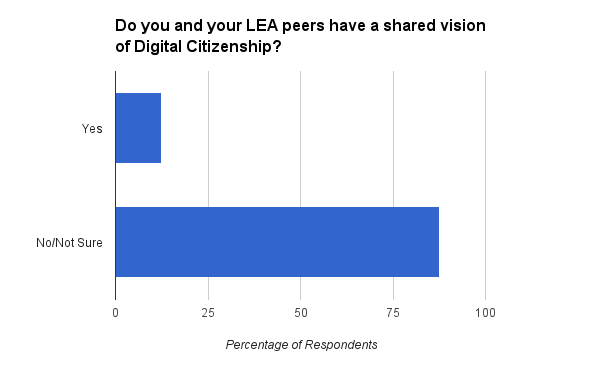
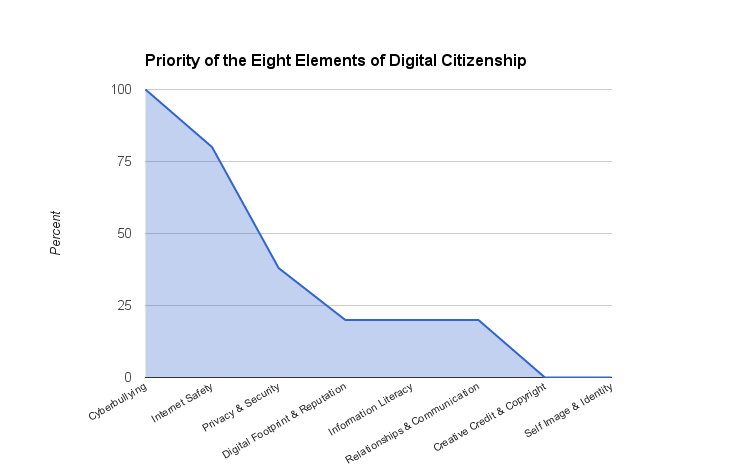
The picture painted by some of the early data shows that the local education agencies are at various places with respect to a shared vision of digital citizenship implementation in the classroom. It appears that a shared vision within districts is not the norm, which should prompt concern among all stakeholders. The way in which respondents prioritized the eight elements of digital citizenship is also notable. To be consistent in the delivery of digital citizenship, is any element more or less important than the other?
This project holds promise for bringing together districts from across Arizona and providing talking points that could lead to positive collaboration and common language among educators. We should applaud the effort and look forward to the data.

Moving Forward
It is becoming clearer everyday that digital learning is on the rise, even if our schools do not provide these opportunities. The 2014 SpeakUp Survey showed that 75 percent of students think every student should have access to a mobile device during the school day to support learning. Many of them have taken matters into their own hands, as 58 percent already use their own smartphones in class and perform such tasks as taking photos of assignments and textbook pages.
So where do we start with such an overwhelming responsibility that affects our classrooms and the teachers that ultimately set the example for our students? A quick Web search will return numerous sites with digital citizenship resources. Common Sense Media is a popular choice and offers scope and sequence materials that are age appropriate for the classroom and a certification program for educators and schools. It takes much more effort, however, to find actual programs that exist in schools-examples of digital citizenship embedded in those teachable moments that are so relevant to our students. We need to shared successful programs and hold them up as models for others to see (#digitalcitizenship).      


A Partnership
Digital citizenship is no different from good citizenship in general-the only distinction is the medium where that community exists. If we expect our students to be responsible members of the digital community, we have to collaborate with all stakeholders to create successful learning opportunities, encourage parental support, lead by example, and include our students in that discussion. Technology is no longer a once-a-week event or a trip to the computer lab; it is embedded in our classroom and personal environments. It will take more than the librarian or tech teacher to instill the values of digital citizenship into the lives of our students and make good digital citizenship part of the Big Four.

Thursday, June 30, 2016

The ISTE Blues

Data Overload
Like most of us returning from ISTE, you are probably experiencing the emotional roller coaster ride that accompanies the flight or drive home. The data overload from the content filled sessions, keynotes, poster and playground spaces, and endless conversations can be overwhelming. It is possible to keep the "ISTE's Over Blues" from setting in, but do not put it off for later, jump into your content while it's fresh and take charge! 

From the Middle
It doesn't matter what your role is in your organization, you have just spent four days gathering content that you need to share. Take the lead from the middle approach and decide how you can share what you have learned with your peers, administration, technology staff and any others that could benefit from what you have learned. This could also be an opportunity to use a new medium to share information with a presentation platform, blog site, or creative new app that you experienced at the conference. With the pace at which new technologies and classroom practices evolve, technology, curriculum, and professional development teams will appreciate the benefit of the information you provide. 

Stay in Touch
I have said a number of times that the best place to make connections at ISTE is standing in line waiting to purchase that delightful ice coffee or refreshing bottle of water. I do suggest we change the phrase "standing in line" to the "PLN line", because we ultimately exchange email addresses, Twitter and Instagram handles and district names for future collaboration, with educators from around the globe. Now that you have these new contacts, don't hesitate to reach out and continue the conversations and sharing of ideas that you started while waiting in that PLN line.
The power of social media can assist, so take advantage of the new account you just created in those power sessions and use the #ISTE2016 hashtag to share with your new friends. 

Bring ISTE Home
Coming together with 15,000 like minded educators is something magical that ISTE has
managed to create for many years. What many ISTE members may not be aware of is the ISTE affiliate groups that exist in virtually every state in our country, as wells as international affiliates in Australia, Canada, Europe, India, The Philippines, and the United Kingdom. These affiliate groups are all a bit different and have a variety of benefits and professional development opportunities that happen year around. Joining a local affiliate is another way to continue to grow your PLN, attend events in your state and become involved with advocacy movements that can directly affect your classrooms and students. To find an affiliate in your area, check out the affiliate directory and continue making connections!

Small World
CC BY-SA 3.0
Staying relevant in a world continually growing smaller is not an easy task and each new generation of students brings a fresh mindset that as educators we must be able to connect with. Attending events like ISTE, connecting with others through social media, and remaining outside of the four walls of our classrooms, cubicles and offices, will allow us to continue growing and remain the most important part of the classroom. See you in San Antonio! 

Sunday, February 21, 2016

Move Over Flair

Time...
https://creativecommons.org/licenses/by/2.0/
Probably the most common issue we hear about in life has to do with not having enough time for, and fill in the blank. Often the counter to that statement is we will make time for what is important, which is true to an extent, but doesn't change the fact that in our professional lives we still must prioritize. What has been a struggle for a number of years now from a technology integration perspective, is how we provide solid professional development to our teaching staff that is relevant, timely, and doesn't require the traditional hour before or after school that teachers may not have time for. 

Short Meaningful PD
I like to use the average length of a YouTube video to provoke discussion on just how long someone will stay with you when providing PD. Depending on what day you check, the average length of the top five most popular YouTube videos vary from 2.5 to 4.5 minutes long. When I checked #popularonyoutube when writing this post, the longest video was 5.31 and the shortest was 31 seconds. I would imagine that some may say if the content is good, it doesn't matter how much time it takes to view and to some extent that may be true. However in the hustle and bustle of the K-12 setting, moving at the pace of 140 characters at a time seems to make more sense if we want to reach a larger audience. At AJUSD we have made the conscience effort to change the way we are providing PD to our teaching staff that provides short, meaningful bursts of sharing content while staying as close to the 15 minute window as possible. Bethany Ligon, AJUSD's Technology Integration Specialist, has taken this approach with our collaboration coach tips and tools videos recently and we are monitoring feedback on video length to see what is most effective for our staff. 

Badge Up
Another area that takes time and attention is growing our professional learning networks and sharing what our teachers and administrators are doing on their campus. Social media has obviously been a game changer in this area and blending this with the traditional walking by a classroom and seeing evidence of the great things happening, has led us into the badge game. It is difficult for just one district TIS, to get around to every classroom and see what is happening. With a quick Google Site and Forms, teachers and administrators can apply for a badge, share their artifacts, display their accomplishment, and share with others how they are integrating technology in their classrooms. Bethany summed up nicely what she enjoys most about implementing this program:

The best part for me, is that teachers are able to request training on exactly what they want. It's not a one size fits all professional development setting anymore. But it's me meeting with one teacher or a small team of teachers who want to grow their instructional toolbox in a specific area or with a particular tech tool/app. And because I now have documentation on which teacher is proficient on each tool, I can use them as a resource as needed. 
Another "best part" for me is the teacher's reaction when I walk into their rooms on a Thursday afternoon to hand them their badge. Yesterday, a teacher literally jumped up and down and clapped her hands because she was so excited and then her little first graders started cheering for her. That totally made my day.

Find A Way
Time doesn't have to be a monster that keeps us from growing and sharing on a professional level. If we look around and see what others are doing, share what we are doing, and be willing to try new things, great things will happen. In the words of Ian Malcolm, life finds a way. 

Wednesday, January 21, 2015

25 Pound Backpack


My Back!
Have you picked up one of your kiddos backpacks lately and immediately thought, oh my gosh that seems heavy?  I often compare my backpack that contains a laptop, iPad, and miscellaneous cables to theirs that are full of books, binders, and pencils, and there is no comparison. I literally weighed one of them recently and it weighed 25 pounds, which I thought was crazy heavy. After digging into the backpack, I found the culprits to be a math book and a social studies book. The good news is the school provides two sets of books and the students do not have to transport them back and forth on a daily basis, however it leads us back to the conversation about textbooks and where we are at with them as an educational community.

Timing
I have to be honest, I started this post a few weeks back and it has been sitting quietly waiting to be finished. When I read the recent Center for Digital Education article covering the FCC Commissioner's discussion in San Francisco, the timing seemed appropriate. Jessica Rosenworcel addressed an audience of tech industry professionals, updating them on the recent FCC initiatives, encouraging "digital disruption within the teaching and textbook industry." Rosenworcel pointed out a few things that I feel are worth sharing here.

  • “In the rest of the world, we have an infinite array of digital tools to change our civic and commercial lives. Yet somehow we’ve put up some barriers at the school doors, It’s time we started inviting them in and wrestling with them and doing some good things”
  • "As a market estimated at $17 billion and with price increases in the last decade at 800 percent, the textbook industry’s services burden educators and students alike — average school districts only able to afford textbook purchases every seven to 10 years"
  • “I just think it’s crazy if we keep on doing what we’ve done before because the world and the job opportunities that are out there look remarkably different"

These statements have all been said before in a number of ways by others looking to lighten up backpacks and promote change in a system that has been relatively unchanged for a number of years. I applaud anyone who takes the initiative to start these conversations as a way to reflect on the education we are providing our students. We must provide a relevant experience and not allow a $17 billion industry to give us what we have always had because that is what we have always done. Industry will provide what the educational community wants, so the conversation is important to have at the school, district, and community level. Listen to our teachers and students and allow their ideas, thoughts and needs, drive the industry to develop the disruption that will keep our classrooms moving forward.

Snob
I want to make it clear that I am not a book snob by any means and would never advocate for throwing all classroom texts in a big bonfire. Going to the extreme in any direction is what has kept technology a conversation piece, big shiny object, instead of just an everyday part of our classroom environment. But, providing our students with something other than the same basic textbooks like we have always done, is a conversation that is very necessary for today's classroom.   

Wednesday, October 22, 2014

How Many Times?

Just Ask
How many times have you heard an adult say "just ask the students how to do it" when talking technology in the classroom or anywhere for that matter? I will admit that when I need a tip about making my Instagram posts look better I ask my 11 year old daughter, and when my son rolls his eyes at me and says "you just don't understand", about what kids are watching on YouTube, I ask him to explain. I have experienced a few situations lately that have reinforced the notion that just because kids are kids, doesn't mean they understand technology.


Here's an Idea
Recently at home I upgraded our video editing software and it had been awhile, so it jumped a few versions. My son's passion right now is creating videos of his friends video game activity, which prompted the "you just don't understand" when I asked him why. At any rate, I knew he would spin out when he realized how different the suite now looked. He took it in stride though and worked through the changes with one issue, the software was horribly slow. I gave the standard answer, Google the problem and see if others are experiencing the same thing. That was met with resistance and why don't we just go back to the old version. The real issue however wasn't that he was trying to avoid the problem, but he didn't understand where to begin or how to intelligently "Google" the problem. I assumed he had already opened up task manager to check how much processing power was being used, what percentage of memory was available, was the program producing any error messages, etc. Once we sat down together and started looking closer, we found the program was scanning the entire my documents folders for pictures and videos, and slowing things down. Problem solved and valuable lesson learned about trouble shooting a software issue.


Don't Assume


We must be careful not to assume just because kids are kids they know everything about technology. I see students struggle to access their Google Apps account and create a document, share it with their peers and collaborate efficiently. These skills seem simple on the surface and any student should be able to do this, but many can not. As educators we must find ways to have these teachable moments in our classrooms. As administrators we must make sure that our teachers have the training, devices and resources to make this happen. Our students today are as just as smart and motivated as any generation has ever been, they just need that little bit of guidance and then they will go and make it even better for tomorrow.


Thursday, November 7, 2013

Dump Truck Model

Back Up

Models haven't changed much over the years when it comes to implementing technology in our schools. I have by not been perfect by any means, but have learned a few things along the way that I use as guiding questions before making implementation decisions. However often circumstances seem to get in the way and decisions are made that produce large blanket purchases of technology that is hastily thrown into classrooms. We have seen this happen many times and on such a large scale that it gathers negative press when things don't go oh so perfect. My concern with the dump truck model is the negative impact it could have on the smaller roll outs that generally take more effort to set in motion.

Celebrate
Don't get me wrong, there are any number of large roll outs around the world that have been well planned and executed and remain a model for others to follow. It is those scenarios that we need to celebrate and hold up as examples to promote the importance of providing our students the relevant environment they deserve. The recent publicity that LAUSD has received with their billion dollar ipad initiative is one that is too big to fail. Without being involved in such a gigantic project, I can only reserve judgment on why they have had their issues, but it has drawn attention and gives the nay sayers fuel that is unfairly used in other situations. LAUSD will work out their issues and find success, they have to, and it will benefit other educational technology projects in many ways. Many of us do not have the resources that larger districts possess and having a successful model with resources to share is important for success outside of LAUSD.

Take Steps
I did a quick search for "steps for implementing technology" and had a wide range of returns, which included a variety of business world ideas also. One article that held my attention was titled, "Eight steps for implementing a technological overhaul", written by Ken Tysiac and highlighted the work of author and consultant Geoffrey Moore. Although the focus was business, many of his eight points easily cross over to the K-12 environment and I have highlighted a few below that I feel are very relevant to implementing a successful technology implementation.

  • Determine which tools would have the biggest impact on effectiveness in those key moments with clients.
  • Calibrate ambitions with their organization’s technology adoption tendencies, such as whether employees tend to be innovators, pragmatists, or conservatives.
  • Recruit to the effort first those employees who tend to embrace new ideas.
  • Engage with outside help to design and prototype the first new tools for communications and interactions
  • Focus on user experience as the critical acceptance criterion.
  • Get feedback from early adopters to create the case for applying the system to more pragmatic, less enthusiastic adopters.
  • Align the technology to solve a particular issue that causes the pragmatists pain, and do whatever it takes to solve that issue.
  • Once pragmatists are convinced, deploy a global roll-out.

Moore's ideas were addressing a specific need for client employee relationships and did not include the initial employee input on the best tools to address the need, which is something we rely on in the K-12 space, or should. But the idea of recruiting the high flyers that are always willing to embrace new ideas and listening to their feedback is critical.

It is difficult not to take advantage of grants, overrides, large funding sources of any kind when they present themselves. My hope is that the dump truck model is put in perspective and the audience, early adopters, and their feedback is kept in mind before that familiar sound is heard...beep...beep...beep. 

Sunday, June 30, 2013

Soak It In

It's Over
Isn't it amazing how fast time passes when you are engaged in something you enjoy doing. The ISTE conference is one of those things that always seems to go by a bit to quick for me. It's that one session that you just could not squeeze in, the byod session that you didn't register for early enough, and most importantly that last opportunity to talk with someone from somewhere else. But that is the great thing about making all those connections, they are so engaging and refreshing, that you can't wait to plan for next year's trip.

Not A Commercial
I know that sounded like a paid advertisement for the conference, but that is not my intentions. The point that I am trying to make is very simple, we enjoy taking part in engaging activities. The range of those activities are all over the board at the conference, lectures, panels, byod's, keynotes, poster sessions, the list goes on.

The Magic
So what is the piece that makes all the different varieties of presentation so engaging, wait for it...the presenter(s). The great ones are able to use a variety of ways to engage us and keep us glued to their words, but more importantly, creatively finding ways that allow us to participate, collaborate and create, all within a small window of time. A good presenter quickly makes a connection with the audience, has us involved in communicating with one another and often leaving with something we have created. Hmm, this is sounding very similar to what a teacher does on a daily basis. Maybe start over and replace conference with classroom and presenter with teacher, any similarities? Good teachers, like good presenters, use a variety of approaches to make the magic happen and technology plays a very meaningful part. Take some time and review your ISTE notes, reflect on the experience, and share all the magic with others.

Tuesday, August 14, 2012

Hey Apple!

Good Stuff
I like Mac's as much as I like PC's, each have their strengths and I use both on a daily basis. When it comes to tablets however, my personal preference is still the iPad. I am not going to get all Apple fanatical about it, but there are many reasons I feel they are great devices. However one area of frustration I have had with the iPad is syncing multiple iPads in my school district. We have 18 Bretford Powersync carts that hold 30 iPads each and allow charging and syncing to all 30 iPads simultaneously. The carts are used at 4 elementary and one jr. high school and after a year of use, I needed to reflect and come up with a better plan for the new school year.

Go iPads
The carts are primarily used in the K-3 classrooms and shared between rooms, which opens up the way each school has decided to manage them. The positive of not bringing in the devices and trying to dictate how the devices can be checked out or rotated has allowed each school to be creative with their plans. Initial training with Tony Vincent was a great introduction for teachers to see how the devices can be used for creation and not just as a "station" in the classroom. Our Special Education department has also used the iPads and a variety of specific communication apps to open up opportunities for a number of students. I feel we are in the early stages of realizing what the devices can do and look forward to seeing how our teachers use them again this year in their classrooms.

Train Wreck
Moving from 10 iPads as a pilot to 13 carts in one year brought a number of challenges. The Bretford carts worked great, but at the time there wasn't a way to efficiently sync 30 iPads at once without mass confusion, and the only option through Apple was iTunes. I thought it would be a no brainer to sync all the carts using one MacBook and one Apple ID. Let's just say that if you can do this and your are successful, you are a genius and my hat is off to you. For me, it was a gigantic train wreck that I will spare you the details, but iTunes was created for the individual and not the classroom, so I understand.  The question when reflecting on the situation was how could a more efficient approach allow the teachers freedom to still download apps that they decide are right for their students/curriculum and not have it become a giant mess? It also has to be a solution that can be managed by the teachers and not rely on tech services.

Let's Try It
After many hours of talking with peers, co-workers, Apple, etc., we have decided to use Apple Configurator. Turns out I wasn't the only one banging my head against the wall trying to manage multiple iPads and Apple decided to try and create a solution that would possibly meet the needs of many in the same boat. We have bought MacBook Airs for each of our carts and I have managed to setup 5 new carts with Configurator, ready to roll them out and see how it goes. Each cart will now be shared by a grade level and the 4 teachers will have to colloborate on app management using Configurator after I provide basic training.

Share It
I will definitely make it a point to do a follow up once things are rolling and all 18 carts have been setup with their MacBook and Configurator. In the meantime, please feel free to share any helpful tricks and tips you may have found with multiple iPad syncing, the more collaboration the better!


Sunday, June 17, 2012

Time To Reflect

Time Time Time
Time is one of those things that we never seem to have enough of and it flies by like a supersonic jet! Each school year seems to be getting shorter and shorter or maybe it is because I am getting older, I mean wiser. At any rate, reflection is a very important piece of our daily lives and critical to our success. This past school year there has been a number of experiences that I have reflected upon and would like to share a couple. Please feel free to provide feedback on your experiences also, it helps to read about how others are processing and dealing with similar situations.


www.ajusd.org/ccjh
There are many exciting initiatives going on in my district, but finishing the first complete school year in which our 7th and 8th graders were taking their devices to and from school has brought mixed emotions for me. Educationally, our teachers and students have done an amazing job with the transition and I am looking forward to reviewing this years test scores when they are made available. On the technical side of things, there were a few bumps and even though our local area network connections are robust, our Internet connection is a bit lacking. But those things can be worked on and the 1:1 technician, Mr. Frahm, has done a great job. Not only has he kept the student devices in running order, but the students all know just how important it is to have a great technician on campus to assist them when needed.

One of the difficult pieces for me personally has been the number of devices that have been dropped over the last year. When comparing numbers with other 1:1 programs our overall device loss is within reason, but damage due to dropping seems higher than I would prefer. Here is where I would appreciate some feedback, the devices are not being dropped at school, it is when they are outside the campus. We know this because when at school, the rule is the device stays in the provided carrying case when opened. Little plug for Higher Ground cases, they can pop open the case in seconds and the device never has to be removed, protecting it from a fall. So the question is how to continue working on educating the students to care for their device when away from school?

Collaboration Coaches
Earlier this month a new group of teachers met and began their journey together as the third new group of AJUSD collaboration coaches. Our district's Technology Integration Specialist, Tracy Watanabe, has done an amazing job with building our collaboration coaching program and in my opinion, coaches are key to a successful campus. Watanabe does a great job of explaining how collaboration coaches have worked together in our district to bring 21st century learning skills into our classrooms, click here. A bit of reflection on this topic makes on thing clear to me, I need to spend more time in the coaches classrooms and sitting in on collaboration meetings this fall. Experiencing the relationship building and the sharing of ideas among these professionals is truly inspiring.

                                                                      
Thanks to gbuffet
Take A Moment
Often we become so consumed with planning for the summer or that next big project, we forget to reflect on what we have already done, what worked well, what failed, how we can incorporate prior knowledge into future planning. I only shared two of many experiences that I needed to reflect upon before the busy summer months began, unfortunately time often flies by like that jet I mentioned earlier. Being focused is important, but so is reflection, take a moment, find a quiet place for some inward thinking and call it a day.

Saturday, January 7, 2012

Creative Juices

Take A Moment
It is hard to ignore the countless articles, blogs, tweets, etc. about creativity being lost in our school system these days. To some extent I don't disagree we are putting certain practices in place that can be stifling to the creativity that our students possess. But take a moment and reflect on what we have accomplished as a nation and where we are at. Yes we have many issues that can seem depressing at times, but in my opinion, we still have incredible schools, many opportunities, and creative citizens sharing and working with people around the globe!
courtesy of betterworldbooks.com

I am currently participating in a book study with the ISTE SIGAdmin group, reading the book, "The Flat World and Education." There is mention in the book about Singapore's educational reform and their focus on creativity and innovation, what grabbed my attention was a response by one of the SIGAdmin members about this program.

What is even more interesting is that the "training" the teachers are receiving is being done by, (you'll never believe it), teachers from the United States. True! A very dear friend of mine "commutes" to Singapore monthly to work with 240 teachers for 10 days a month in one of their training programs. my friend says that "the teachers are marvelous and "she returns quite inspired each month." -Becky

As a nation, we should be proud that many countries still turn to the United States for training, observation, and ideas, on how to educate their students to become creative and innovative thinkers. But how do we keep creativity and innovation in the classrooms, many think it is already gone others on the way out?

Keep Them Flowing
So where does technology fit into the puzzle with developing creators and how do we keep the creative juices flowing? As I always like to point out, we must keep the focus on "good teaching" and not the shiny object, and I recently read a grant proposal that stood out as an example of this. Robert Jones, a English teacher in Tempe, AZ, is having his students create Android apps that they will use to review and synthesize literature. The students will then make the apps available to download on their Android tablets or other compatible devices. The project has what I feel are all the right pieces that support innovation and creation in the classroom and the English content standards were the foundation when the project based activity was designed.

courtesy of http://wiki.makerbot.com/
Another technology device that I am amazed with is the 3D printer. Maybe it is just a shiny object that is distracting to me personally, but it seems like the device has a tremendous amount of potential to be used in schools. What better way to incorporate essential standards into a project based activity and actually be able to build a product, literally have it appear right in front of you. I learned about the Makerbot, an affordable 3D printer, from John Miller, Tech Director at Litchfield Elementary, last year. After showing a video of the device to my son, he immediately wanted one so he could make armies of Lego characters and blocks for stopmotion movies. Can only imagine how I could have used this in the classroom many years ago.

Looking Ahead
Developing creative and innovative students is important for any society to be successful and should be a priority around the world. Great things come from new ideas...jobs, success, personal satisfaction, and the understanding that if something isn't working, innovate and make it better. I hope that as a nation we do not lose sight of what has worked in the past, continue to evolve so we are relevant in the present, and develop creators to lead us into the future.

Sunday, December 18, 2011

To The Extreme

Not That One
courtesy of Jim Crossley-raindog
If you thought that I was going to break into a Vanilla Ice song after reading the title to this post, then I apologize. I did however find it a little humorous that the line "collaborate and listen" was in Ice Ice Baby, maybe Vanilla was a bit ahead of his time. But on a serious note, I have been pondering lately why everything seems to be to the extreme, education reform, leadership style, politics, couponing. Rarely these days do you see push, pull, "off balance on purpose" situations that challenge and take staff to the edge, but not completely push them off the cliff. I would argue that disruption, innovation, pushing adults and students can take place with great results without an entire staff/class ending up at the bottom of the canyon.

Off Balance
How many times have you heard that to much of any one thing is not a good idea? The pressure to perform in the K-12 arena seems to push ideas to the extreme and one giant weight is dropped on the balance scale, with no hope of returning to the off balance place that is desired. In Dan Thurmon's book, "Off Balance On Purpose," he writes:

courtesy of christart.com
When we experience imbalance in our lives, we often overcompensate by throwing ourselves in another direction. We think that it takes bold, dramatic action to create change. Sometimes this is true-we reach moments in our lives when a huge shift in thinking or action is completely necessary. But usually when we find ourselves in that predicament, it is because we missed many previous opportunities to make smaller adjustments that would have prevented, or at least softened, the crisis. Often an attempt to overdo it, providing to much force in one direction or another to quickly, will only exacerbate the trouble. -Dan Thurmon

The same thought can be applied to organizations that are struggling to be successful and looking for the magic bullet of change. Instead of looking at the foundational issues within, a bold, dramatic action takes place that results in the scale being tipped completely over.

Technology Balance
I think we often tip the scale to the extreme with technology initiatives as a silver bullet approach, missing the foundational pieces that will truly make using technology in our classrooms relevant. Take a look at all the 1:1 initiatives that have struggled over the years because the focus was on the shiny new object and not:                           

-Good teaching
-Professional Dev
-Digital Citizenship
-Parent involvement
-Infrastructure
-Sustainability

An example of going to the extreme in a 1:1 environment would be piling up every book on campus and having a giant bonfire to celebrate every student having a device. Sure this would afford the ability to eliminate certain texts and some paper use that is not necessary, but a successful 1:1 isn't measured by walking into a classroom and every student having a device open in front of them. We need to think about being off balance enough to sustain meaningful change, without pushing the entire group to the bottom of the canyon for the sake of a photo op. 

Welcome Change
I enjoy change and new things, maybe that is why I don't like riding the same exact trail every day on my bike, or listening to the same music on repeat for a year at a time, I even enjoy clipping a coupon now and again. Speaking of coupons, before creating a stockpile that turns into an episode on hoarding, ask yourself if you are off balance or just going to the extreme for that photo op.